HeHe is an artist duo consisting of Helen Evans (French, British) and Heiko Hansen (German) based in Le Havre, France. Their art works are about the social, industrial and ecological paradoxes found in today’s technological landscapes. Crossing different disciplines, their practice explores the relationship between art, media and environment.
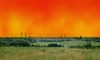
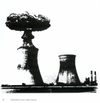
Their ongoing research project about air pollution over the last 20 years and its representation in visual culture let to their ambitious public art project Nuage Vert situated on power plants in Helsinki and Paris. Nage Vert and other projects from this research are documented in their extensive book publication Man Made Clouds. Man Made Clouds is dedicated to the anthropocentric clouds. In our imagination their countless forms and combinations offer infinite possibilities for metaphor. In visual culture, far from being neutral, representations of clouds embody ideology. HeHe’s series of atmospheric dioramas refer to these anthropocentric atmopheres (Chams d’Ozone, Fleur de Lys, Planète Laboratoire, Absynth), they are three-dimensional dynamic cinematic devices, scientific laboratory landscape machines. These hybrid landscapes are post-Eidophusikons, connecting with the primary depictions of thermodynamic pollution in art history (Philip James de Loutherbourg, J. M. W. Turner, Claude Monet) and stage todays polluted climate as immersive environments. The artists chromatic coding of landscapes mixes digital and real world experiences, physical environment with numeric representation (Champs d’Ozone, Rodune, Radiant Tree, Fleur de Lys, Planète Laboratoire). The eerie presence of HeHe’s “Industrial Green” in their artworks situates this colour on a fine line between color perception, technological progress and ecological imagination. “Positive, life-affirming, healthy, natural and ecological the industrial green has also dystopian side effects: Clinical green, green deserts, algae bloom, nuclear green afterglow, cathode rays, green fluorescent proteins, ectoplasm, kryptonite. The glow-in-the-dark green is the colourwhich is nourishing the myths of the anthropocene. Our greenwashed consciousness is manipulated by the mighty attribute of the ‘ultra green’wavelength. Our positive reception of this particular spectral range allows the laboratory vista to become a technological landscape. At the same time the industrial green is a tracing dye, marking the territory of a new polluted age.” (Jens Hauser)
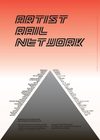
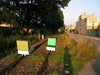
The actors of HeHe’s performance installations are the machines themselves: trains, cars, oil rigs, power plants, incinerators, cranes, and the electric devices of mass consumption. Installed in real world environments or staged infrastructures, the machine becomes a theatrical device. Using humour, romance and ingenuity, their work opens alternative readings to the narrative of ecology versus industry. Their Train Project series is an example of their concept of “reverse cultural engineering”. Referring to the “industrialized consciousness” as Wolfgang Schivelbusch denotes it in his book The Railway Journey, the Train Project is a speculation into the language and aesthetics of transportation. Situated in many emblematic railway locations, active or abandoned, HeHe proposes transport systems which function in the moment of operation. The performances generate an ongoing scenography that engages in questions about the reality and “real fiction” of travel. As an inverse of the book “Aramis, or the Love of Technology”, by Bruno Latour the Train Project projects the “machine ensemble” onto speculative alternative future.
HeHe have installed large-scale works in public space. Site-specific commissions include: Public Works (Ondernemersfonds Utrecht), Bruges Triennial, Maison des Arts Georges Pompidou (Cajarc, Lot), Casino Forum d’art contemporain (Luxembourg), Museum of Contemporary Art Zagreb, Nuit Blanche Paris, Le Voyage à Nantes, FACT (Liverpool) & The Arts Catalyst (London), SKOR (Amsterdam), The Lovelock Art Commission/Cape Farewell in collaboration with MOSI (Manchester), Invisible Dust (London), Centre Georges Pompidou Paris, European Capital of Culture (Luxembourg & Grand Région).
Their monumental project Nuage Vert, which beamed a laser light onto the cloud released by a power plant, won a Golden Nica in Hybrid art at Arts Electronica (2008). Further international prizes include an Honorary Mention at Arts Electronica (2011), the Environmental Art Fund in Finland (2008), Prix Green Zero1 San José (2008) and Cynet Art prize Dresden (2001).
Bridging between media arts, design and contemporary art, HeHe have exhibited in many cultural institutions internationally including the Centre Pompidou, Royal Academy London, Palais de Beaux-Arts (Bruxelles), Parc D’Arte Viventi (Turin), MAXXI (Rome), National Art Museum of China (Beijing), Biennale de Lyon, San José Museum of Art, Biennale Internationale Design (St Etienne). Their work has been aquired by public collections (Fonds municipal d’art contemporain de la Ville de Paris, FRAC Alsace) and private collectors.
HeHe is represented by the gallery Aeroplastics Contemporary in Bruxelles. Both Helen and Heiko are teaching at the École Supérieur d’Art et Design du Havre where they initiated and are responsible for the Master unit Art Media Environment.
Contact
Helen Evans and Heiko Hansen 76600 Le Havre, France contact(at)hehe.org @hehe_collectif